
Beginnings
Mumbai, India
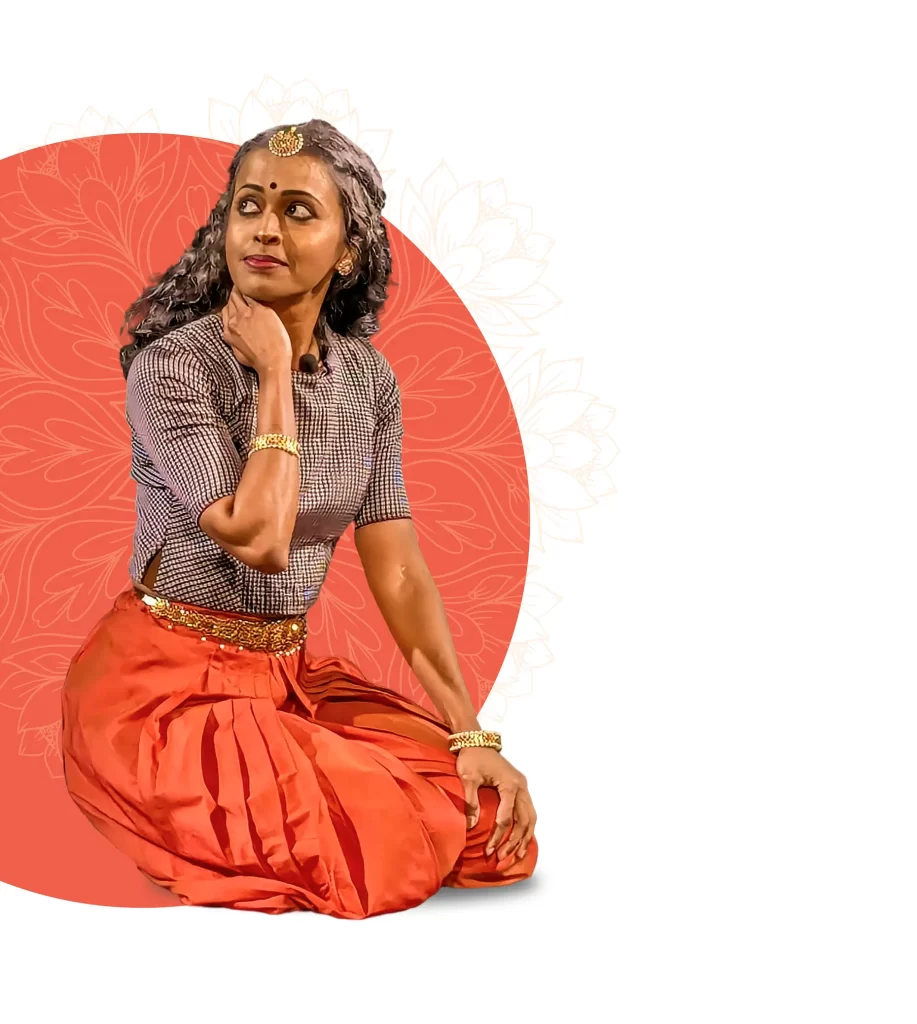
I began my Bharatanatyam training in Mumbai with my first teacher, Rohini M. Singhi. Alongside dance, I pursued academic study, completing a Political Science and Philosophy major at Jai Hind College, Mumbai, followed by a Performing Arts degree from Nalanda Nritya Kala Mahavidyalaya.
Training
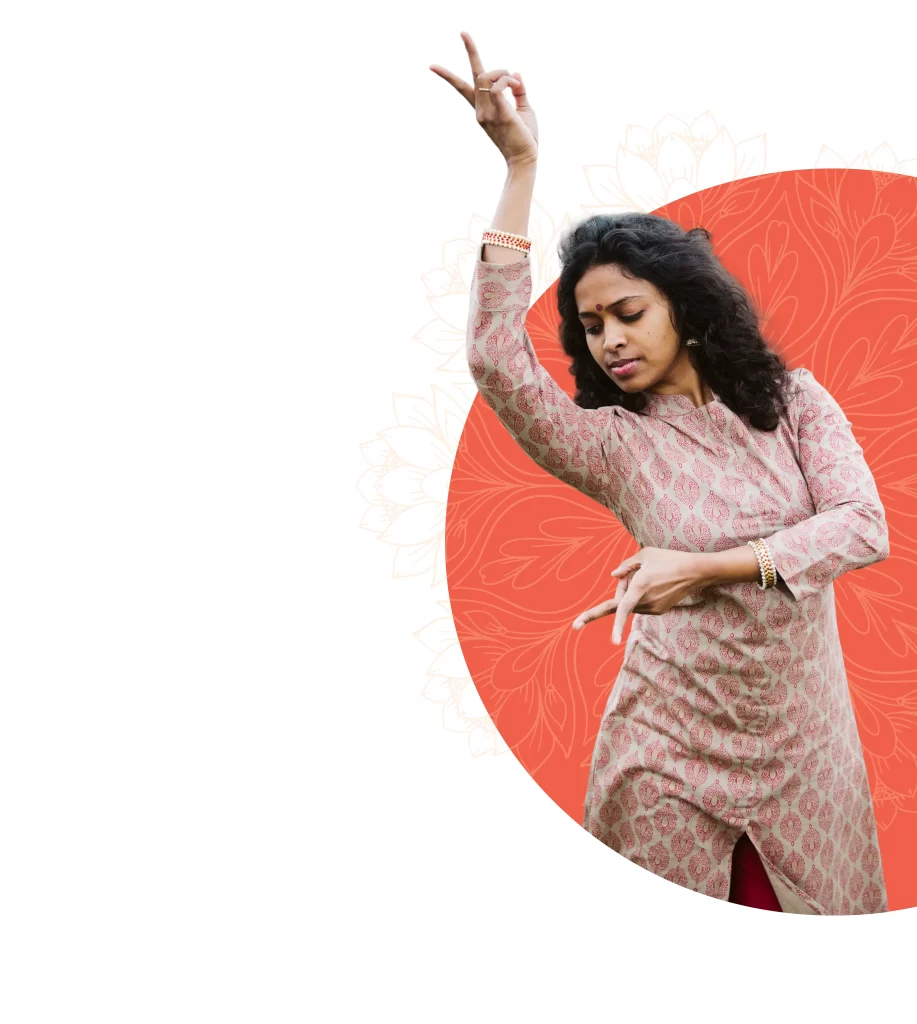
I continue to train under Vaibhav Arekar, whose guidance has deeply shaped my artistic practice. I was part of several dance productions and tours with Sankhya Dance Company, performing extensively and learning through lived, rigorous performance experiences.
During this phase, my relationship with Bharatanatyam deepened as I engaged with questions of lineage, tradition, appropriation, and inheritance, particularly within a form historically practised by women from the hereditary communities.
Today, my practice is an ongoing dialogue between the traditional repertoire I’ve inherited and the lived experiences of my present. It is a rigorous, daily commitment to refining technique while exploring how Bharatanatyam can hold the complexities of my immigrant identity. I continue to return to the studio not just to maintain form, but to investigate the intersections of persistence, memory, and the evolving meaning of home through movement.

Performances (Solo & Ensemble)
My work is a personal map of the places I now call home. As an immigrant artist, I use dance to understand how we carry our roots into new landscapes and find common ground through shared human experiences. This inquiry is the focus of my recent projects: As You Are, a performance blending Bharatanatyam, experimental movement, theatre, and live music to explore how women collectively navigate body image, motherhood, self-doubt, rebellion, abuse, and love—and how these contradictions live within our bodies. This contrasts with Kismet with Kali, a solo dance-theater work that draws on the mythology of Kali to navigate deeply personal cycles of love and loss. These creative journeys also shape my role as a Principal Dancer with Nava Dance Theatre, led by Artistic Director Nadhi Thekkek.

Curation
When Eyes Speak is San Francisco’s first South Asian choreography festival. Founded by Preethi Ramaprasad in 2018, I joined the team in 2019, and we have co-curated the festival together ever since. Our shared vision is to support artists who are expanding and reimagining South Asian diasporic movement and performance practices.
The Varnam Salon is a performance series featuring senior practitioners, mid-career artists, and emerging dancers. Co-founded in 2018 by Nadhi Thekkek, Preethi Ramaprasad, and me, the series was created to celebrate Bharatanatyam artists in performance, encourage the continued practice of works from the traditional repertoire, and support artists with strong ties to California. The salon has been supported by the California Arts Council Local Impact Grant.
I lead Art Echoes, a series that brings artists from the South Asian diaspora into intimate studio spaces through a lecture-demonstration format. Artists share their choreographies, personal journeys, and approaches to their practice, giving students a closer look at the years of dedication behind the art form. Through these conversations and performances, I hope to inspire the next generation to stay connected to their identities and see that a South Asian body can hold and express many forms of movement.

Teaching
2018 – Present
In 2018, I founded Kshetram, a Bharatanatyam institution based in Livermore, California. Kshetram grew from my own experiences as a dancer – learning, questioning, and finding my place within tradition, culture, and the practice of Bharatanatyam.
Through Kshetram, I seek to hold this form as a living practice—one that honors its roots while allowing space for transformation and growth across generations.
I follow a seven-year curriculum, through which students learn a complete Margam repertoire, alongside Slokas from the Abhinaya Darpana, rhythmic frameworks, and choreographic methods.
Beyond the Stage
When I’m not dancing, you’ll usually find me watching a good show, out on a long walk or hike, daydreaming, or simply staring into space, something I seem to be quite good at.
I’m endlessly fascinated by stories, whether they’re told through movement, books, conversations, or everyday moments.
A Malayalee-Mumbaikar at heart, I’m happiest with a cup of chai, spicy food & salty snacks, and a really good chocolate dessert.